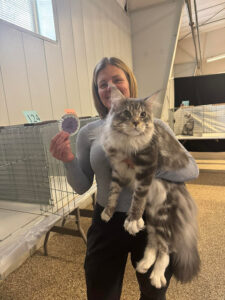
A healthy adult Maine Coon weight typically ranges from 9 to 18 pounds, with males usually falling between 13 and 18 pounds and females between 9 and 13 pounds. Factors like genetics, diet, and neuter status all play a role. Kittens gain weight gradually, often not reaching full size until they’re 3 to 5 years old.
If you’ve ever met a Maine Coon in person, you probably noticed one thing right away: this cat is big. Really big. Tufted paws, a broad chest, and a tail that seems to go on forever. But just how much should a Maine Coon weigh, and when should you start worrying if your cat seems too light or too heavy?
This guide breaks down everything you need to know about Maine Coon weight, from kitten growth charts to the factors that influence adult size. Whether you’re bringing home a new kitten or trying to figure out if your full-grown Coon is on track, you’ll find practical answers here.
How Much Does a Maine Coon Weigh on Average?
Maine Coons are one of the largest domesticated cat breeds, and their weight reflects that. According to the Cornell Feline Health Center, Maine Coons can weigh anywhere from 8 to 25 pounds, though most fall into a more typical range.
Here’s a general breakdown by sex:
- Male Maine Coons: 13 to 18 pounds (some large males reach 20+ pounds)
- Female Maine Coons: 9 to 13 pounds
Keep in mind these are averages. Some Maine Coons stay on the smaller end even as adults, while others — especially males from larger bloodlines — can exceed 20 pounds without being overweight. If you’re researching Maine Coon kittens for sale, asking the breeder about the size of the kitten’s parents can give you a good clue about how big your future cat might grow.
Why Are Maine Coons So Big?
Maine Coons developed in New England, where harsh winters favored cats with larger bodies, thick fur, and sturdy frames. Over generations, this led to a breed built for both size and resilience. Their slow growth rate is part of this story too — Maine Coons simply take longer to mature than most other cat breeds.
Maine Coon Weight by Age: A Growth Timeline
Tracking your kitten’s weight over time is one of the best ways to confirm healthy development. Here’s a general Maine Coon weight chart by age:
- Birth: 3 to 5 ounces
- 1 month: 1 to 1.5 pounds
- 3 months: 3 to 5 pounds
- 6 months: 6 to 9 pounds
- 9 months: 8 to 12 pounds
- 1 year: 9 to 14 pounds
- 2 years: 10 to 16 pounds
- 3-5 years (full maturity): 9 to 18+ pounds
Notice how the growth doesn’t stop at one year, unlike many other breeds. Maine Coons are famous for their slow maturation, and it’s completely normal for them to keep filling out until they’re 3 to 5 years old. If your Maine Coon kitten seems smaller than these numbers suggest, don’t panic right away — individual growth rates vary. But if you’re concerned, it’s always worth a conversation with your vet.
What Factors Affect a Maine Coon’s Weight?
Several things influence how big your Maine Coon ends up, and understanding them helps set realistic expectations.
Genetics and Bloodline
Just like people, cats inherit size traits from their parents. A kitten from a line of large Maine Coons is more likely to grow into a big cat. This is why reputable breeders can often give you a rough idea of expected adult size based on the kitten’s lineage. Browsing a Maine Coon size guide before choosing a kitten can help you understand what to expect.
Diet and Nutrition
A Maine Coon that’s fed a high-quality, protein-rich diet will generally grow steadily and maintain a healthy weight. Poor nutrition — whether it’s low-quality food or overfeeding — can lead to either stunted growth or unhealthy weight gain. The ASPCA recommends feeding cats a balanced diet appropriate for their age and activity level, which applies just as much to Maine Coons as any other breed.
Spaying or Neutering
Spayed and neutered cats often have slightly different metabolisms, which can lead to weight gain if their food intake isn’t adjusted. This doesn’t mean you should avoid spaying or neutering — it just means portion control becomes more important afterward.
Activity Level
Maine Coons are playful and active compared to some other large breeds, but indoor cats with limited exercise opportunities can still pack on extra pounds. Interactive toys, climbing trees, and regular play sessions go a long way toward keeping your Coon at a healthy weight.
Is My Maine Coon Overweight or Underweight?
Weight alone doesn’t tell the whole story — body condition matters more than the number on the scale. Choose a vet check-up if your cat’s weight falls outside the typical range for its age, or if you notice sudden changes.
Signs of a Healthy Weight
- You can feel (but not see) the ribs with gentle pressure
- A visible waist when viewed from above
- No excess belly fat hanging down
Signs Your Maine Coon May Be Overweight
- Difficulty feeling the ribs
- No visible waist
- Reluctance to jump or play
Signs Your Maine Coon May Be Underweight
- Ribs, spine, or hip bones are easily visible
- Lack of muscle tone
- Low energy or lethargy
According to PetMD, obesity is one of the most common health issues in domestic cats, and larger breeds like Maine Coons aren’t immune. If you’re unsure where your cat stands, your veterinarian can calculate a body condition score, which is a more accurate measure than weight alone.
Tips for Maintaining a Healthy Maine Coon Weight
Keeping your Maine Coon at an ideal weight isn’t complicated, but it does require consistency.
- Feed measured portions. Free-feeding often leads to overeating, especially in a breed as food-motivated as the Maine Coon.
- Choose high-protein food. Look for cat food with real meat as the first ingredient rather than fillers.
- Schedule regular vet visits. Annual or biannual check-ups help catch weight issues before they become serious.
- Encourage daily play. Even 15-20 minutes of active play can make a noticeable difference over time.
- Monitor treats. Treats should make up no more than 10% of your cat’s daily calorie intake, according to general veterinary guidance from the Merck Veterinary Manual.
If you’re still building your knowledge of this breed, our Maine Coon care guide covers nutrition, grooming, and health in more detail.
Common Mistakes Owners Make with Maine Coon Weight
- Assuming bigger is always better. Size is a breed trait, not a goal to push past healthy limits.
- Comparing kittens to breed standards too early. Growth rates vary, and Maine Coons mature slower than most breeds.
- Ignoring body condition in favor of the scale. A number alone doesn’t reflect muscle versus fat.
- Skipping portion control after spay/neuter. Metabolism changes, but feeding habits often don’t adjust to match.
Frequently Asked Questions About Maine Coon Weight
What is the average Maine Coon weight for an adult cat?
Adult Maine Coons typically weigh between 9 and 18 pounds, with males on the heavier end of that range and females usually lighter.
At what age do Maine Coons reach their full weight?
Most Maine Coons reach their full adult weight between 3 and 5 years old, making them one of the slowest-maturing cat breeds.
Can a Maine Coon be too heavy?
Yes. While Maine Coons are naturally large, excess weight beyond what’s proportional to their frame can lead to joint issues, diabetes, and heart problems, just as it would in any breed.
How can I tell if my Maine Coon kitten is growing at a healthy rate?
Compare your kitten’s weight to a general Maine Coon weight chart by age, and watch for steady, gradual gains rather than sudden spikes or stalls. Your vet can confirm healthy growth at routine visits.
Do male and female Maine Coons weigh differently?
Yes. Male Maine Coons generally weigh 13 to 18 pounds, while females typically range from 9 to 13 pounds.
Final Thoughts on Maine Coon Weight
Understanding Maine Coon weight helps you spot problems early and set realistic expectations for your cat’s growth. Remember that every cat is a little different — genetics, diet, and lifestyle all shape the final number on the scale. What matters most isn’t hitting an exact weight target, but keeping your Maine Coon active, well-fed, and at a body condition that supports a long, healthy life.
If you’re thinking about adding one of these gentle giants to your family, take a look at our available Maine Coon kittens and reach out with any questions about size, health, or care. A little research now goes a long way toward raising a happy, healthy Maine Coon for years to come.