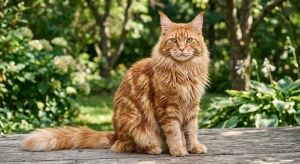
Orange Maine Coon cats get their vibrant coat from a sex-linked red pigment gene, not a separate breed trait. True solid orange is rare, since most “orange” Maine Coons are actually red tabbies with distinct striping. They share the same gentle, dog-like temperament as other Maine Coon colors, and reputable breeders price them similarly to other coat variations, typically $1,000–$2,500 depending on pedigree and breeder reputation.
There’s something undeniably striking about a Maine Coon wrapped in fiery orange fur. The color seems to amplify everything people already love about this breed—the tufted ears, the broad chest, the sheer physical presence. But orange Maine Coons carry a genetic story that’s more nuanced than their rust-colored coats suggest, and understanding it can help you choose, care for, and appreciate one of these cats with more confidence.
This guide breaks down the genetics behind that orange coloring, what makes these cats different (or not) from their tabby and solid-colored relatives, and what to expect if you’re considering bringing one home.
What Makes a Orange Maine Coon Cats?
Orange coloring in cats comes from the “O” gene, which controls the production of red/orange pigment (pheomelanin) instead of black or brown pigment (eumelanin). This gene sits on the X chromosome, which is why orange cats are disproportionately male—a male cat only needs one copy of the gene to display the color, while a female needs two.
According to the International Cat Association (TICA), coat color genetics in cats follow predictable inheritance patterns regardless of breed, and Maine Coons are no exception. The breed standard doesn’t penalize orange coloring; it’s simply treated as one of many acceptable coat variations.
Is a Solid Orange Maine Coon Rare?
True solid orange Maine Coons—without any tabby striping—are genuinely uncommon. Most cats that people call “orange” are technically red tabbies, since the tabby gene is so dominant in cats that it’s difficult to fully suppress. If you look closely at an “orange” Maine Coon’s coat, you’ll often spot faint ghost striping, especially on the legs, tail, and face.
Breeders who specialize in color variations, including the team at Giant Maine Coon Kitten, can often tell you exactly which pattern a kitten is likely to develop as it matures, since coat patterns in Maine Coons can shift noticeably within the first year of life.
Orange Tabby vs. Solid Orange Maine Coon: What’s the Difference?
Here’s a breakdown of how to tell them apart:
- Orange tabby Maine Coon: Displays visible striping, swirls, or spots in varying shades of orange and cream. This is the most common presentation.
- Solid orange (red) Maine Coon: Has a uniform coat with no visible pattern. These cats are rarer and often highly sought after.
- Red and white Maine Coon: Combines orange patches or patterns with white markings on the chest, paws, or face.
If a consistent, patternless coat matters to you, ask breeders directly about the kitten’s parents’ coats, since pattern expression is hereditary and visible lineage is the best predictor available.
Do Orange Maine Coons Have a Different Temperament?
No. Coat color has no connection to personality in cats, despite popular myths suggesting otherwise. Orange Maine Coons share the same temperament traits that make the breed famous: they’re affectionate, sociable, and known for following their owners from room to room. The American Association of Feline Practitioners notes that personality in cats is shaped primarily by genetics unrelated to coat color, along with early socialization and environment, not pigmentation.
That said, there is a loosely documented pattern among cat owners and veterinarians suggesting orange cats, in general, tend to be slightly more outgoing or food-motivated. This isn’t backed by rigorous scientific consensus, so it’s best treated as anecdotal rather than a breed guarantee.
How Much Does an Orange Maine Coon Kitten Cost?
Pricing typically depends on four factors: pedigree, breeder reputation, geographic location, and how rare the specific coat pattern is. Expect a range of $1,000 to $2,500 for a kitten from a reputable breeder, with solid orange (non-tabby) kittens sometimes commanding higher prices due to their rarity.
Buyers researching options can browse available orange Maine Coon kittens to compare current pricing and availability, and it’s worth reviewing a breeder’s health guarantee policies before committing to a purchase.
What Should You Look for in a Breeder?
Choose a breeder who provides health testing documentation, particularly for hypertrophic cardiomyopathy (HCM) and spinal muscular atrophy (SMA), two conditions the breed is predisposed to. A trustworthy breeder should also let you meet the kitten’s parents and provide registration paperwork from a recognized body like TICA or the Cat Fanciers’ Association.
Caring for an Orange Maine Coon’s Coat
Maine Coons have a water-resistant, semi-long coat that requires regular maintenance regardless of color. Orange cats don’t need special grooming products, but a few habits will keep that coat looking its brightest:
- Brush two to three times per week to prevent matting, especially around the legs and belly.
- Use a wide-tooth comb during shedding seasons (spring and fall) when the undercoat sheds heavily.
- Bathe occasionally with a cat-safe shampoo to maintain coat shine, since orange and red pigments can sometimes appear dull with excess oil buildup.
Diet also plays a role in coat vibrancy. A high-quality diet rich in omega-3 and omega-6 fatty acids supports a healthier, shinier coat over time. For breed-specific nutrition guidance, check out our Maine Coon care guide for feeding recommendations by age and weight.
Finding the Right Orange Maine Coon for Your Home
Orange Maine Coons combine a striking, sunset-colored coat with the gentle, oversized personality the breed is famous for. Whether you’re drawn to the bold stripes of a red tabby or chasing the rarer solid orange coat, the most important step is working with a breeder who prioritizes health testing and transparency over coat color alone.
If you’re ready to start your search, take time to ask breeders detailed questions about lineage, health screening, and coat development, since a kitten’s true coloring often isn’t fully visible until several months of age.
Frequently Asked Questions
Are orange Maine Coon cats more expensive than other colors?
Not typically, though solid orange (non-tabby) kittens can cost more than tabby-patterned ones due to their rarity.
Why are most orange cats male?
The orange color gene is carried on the X chromosome. Male cats only need one copy to display the color, while females need two, making male orange cats far more common.
Do orange Maine Coons shed more than other colors?
No. Shedding is tied to coat length and season, not color. All Maine Coons shed heavily during spring and fall regardless of their coat shade.
Can two non-orange Maine Coons produce an orange kitten?
Yes, if one or both parents carry the orange gene recessively or as a carrier. A genetics-savvy breeder can explain the likelihood based on the parents’ lineage.
Is a solid orange Maine Coon healthier or less healthy than other colors?
Coat color has no bearing on health. Health risks in Maine Coons, like HCM, are breed-specific and unrelated to pigmentation.